
© Enerchange
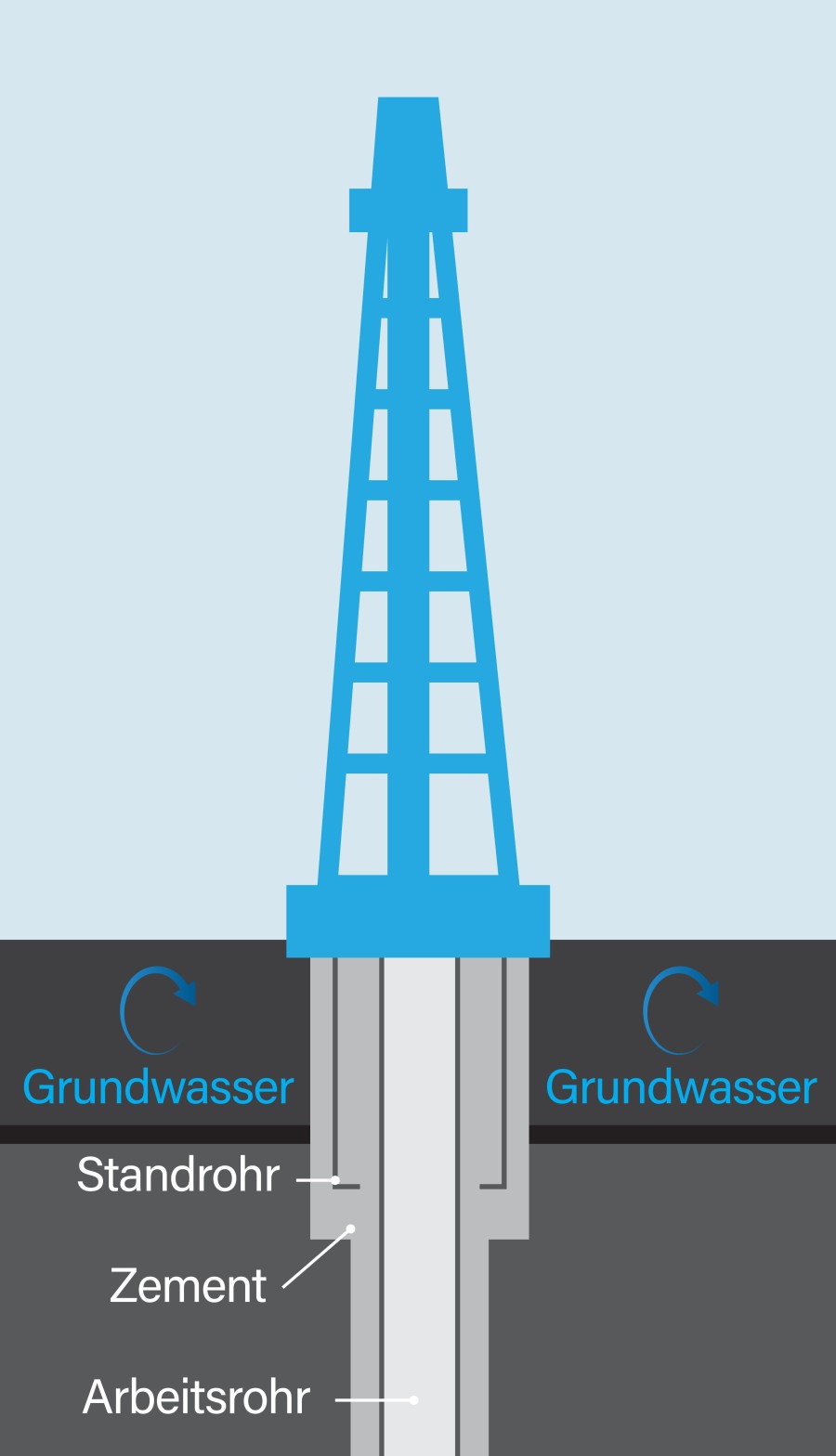
The casing protects the groundwater aquifers whilst drilling is in progress.
As part of the construction of the drilling site, so-called standpipes are therefore installed. These are made of steel and, much like sheet piling, are driven into the ground to a depth below the water table. There, they form a watertight barrier between the drilling operations and the surrounding near-surface layers. The first section of pipe, several hundred metres long, is then cemented into the standpipe, so that further work can be carried out within a triple-protected area (steel – cement – steel). This ensures that our hot deep-well water is always contained within a closed system. We use only its heat, not the water itself, as is the case in thermal baths.
A large and heavy drilling rig is used to carry out the drilling. As with any machine, there are mechanically moving parts that require lubrication. To protect the ground and drinking water from, for example, lubricants washed away by rain, the inner area of the drilling site where the plant is situated is asphalted and designed so that liquids drain inwards into what is known as the ‘drilling sump’.
This is regularly emptied by specialist contractors. In the outer area of the drilling site, where, for example, lorries manoeuvre and office containers are parked, rainwater is channelled into the sewerage system.